1. The product is treated upstream
A UHT or other validated thermal process sterilises the product before it reaches the filler. The product is then cooled to the filling condition and transferred through a sterile path. The filler inlet specification needs the temperature, pressure, flow and product behaviour. The filler does not establish product sterility; the upstream process does.
2. The bag is already sterile
Aseptic bags are supplied pre-sterilised and protected. The bag is loaded, the fitment is exposed in a controlled way, and the filling head connects to the neck. The exact sequence depends on the bag, cap and head design. The operator or machine must not contaminate the fitment or the filling head during connection.
3. The filling interface is treated
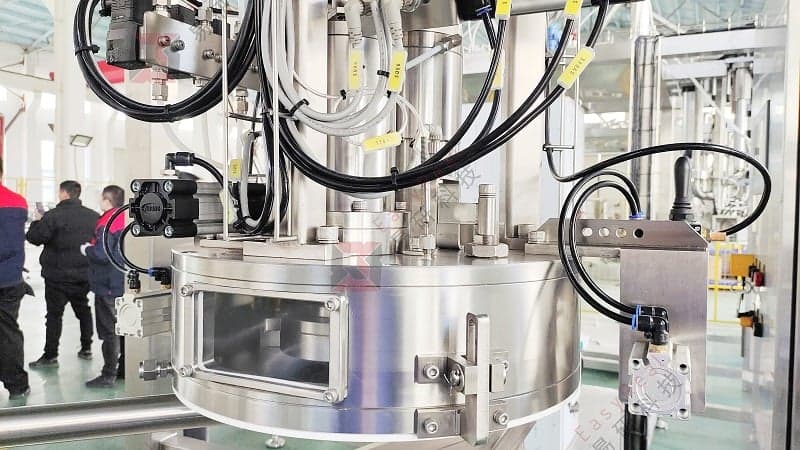
The filling head and the fitment zone are treated before product flows. Steam is commonly used at the interface, with defined pressure, temperature and time. The treatment must be compatible with the bag and cap materials. The catalogue describes a steam-sterilised filling head; the actual cycle and acceptance criteria are project-specific.
4. Product fills under a protected interface
The product flows through the head into the bag. A flow meter or weighing system controls the fill. The final filling phase, valve response and settling time affect the net fill. The bag is supported so that the product weight does not load the fitment. For drums and bins, the outer container carries the load.
5. The bag is closed and inspected
The cap or closure is replaced, and the package is inspected before discharge. The inspection may include cap position, bag condition and identification. A failed closure must be detected and isolated. The filler then hands the package to the conveyor or boxing station without exposing the fitment.
6. CIP and SIP are separate operations
CIP removes product and cleaning residues from the defined circuit. SIP or another pre-sterilisation step establishes the aseptic operating state before production. They have different objectives and acceptance criteria. Map the circuits, the excluded components and the restart procedure. Cleaning effectiveness and sterility are not established by the filler alone.
EQUIPMENT TO COMPARE
Machines that fit this selection.
AF1S single-head bag-in-drum filler
A single filling position for 200 L class aseptic bags in drums. The AF1S is the reference model when one head, one drum station and a straightforward load–fill–close cycle fit your production window.
Review the model ↗AF2SAF2S single-head bag-in-box filler
A compact single-head model for 1–25 L aseptic bags in boxes. The AF2S is the starting point when retail and food-service pack sizes, quick changeovers and a small footprint matter more than bulk drum output.
Review the model ↗PRACTICAL ANSWERS
Frequently asked questions
Does the filling machine sterilise the product?
No. Product sterilisation is an upstream thermal or other validated process. The filler protects the treated product at the package interface and manages filling and closure.
How is the bag kept sterile?
The bag is supplied pre-sterilised and protected. The filling head connects to the fitment under a defined sequence, and the interface is treated before filling. The exact method depends on the package and equipment design.
What is the difference between CIP and SIP?
CIP cleans product-contact surfaces. SIP or pre-sterilisation establishes the aseptic operating state. They use different media, conditions and acceptance criteria.