Automation should remove repeatable handling and record the process, not hide an unstable product or package interface. Define which steps are automatic and which still need an operator.
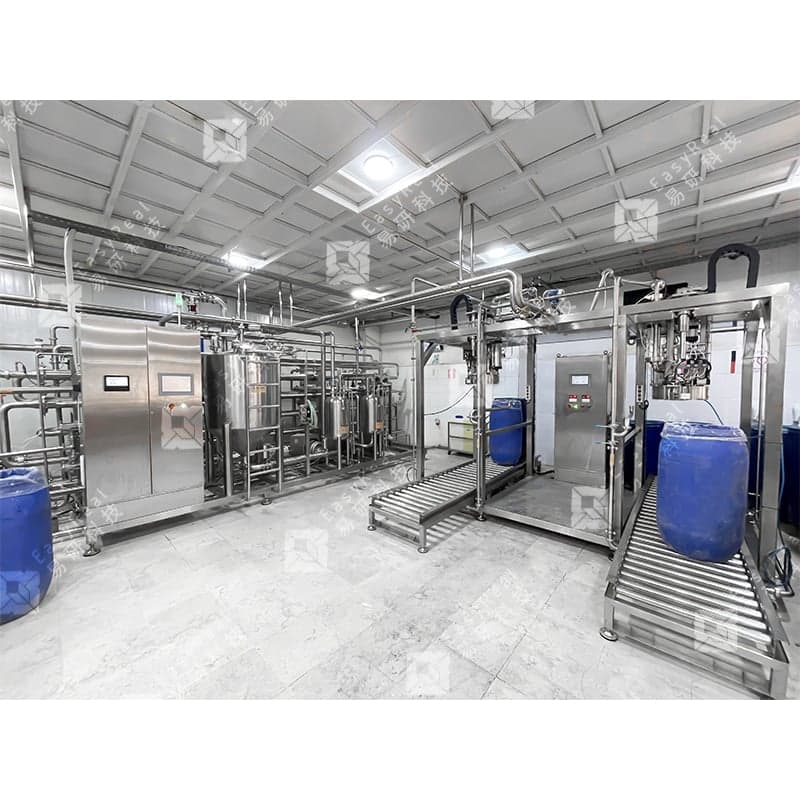
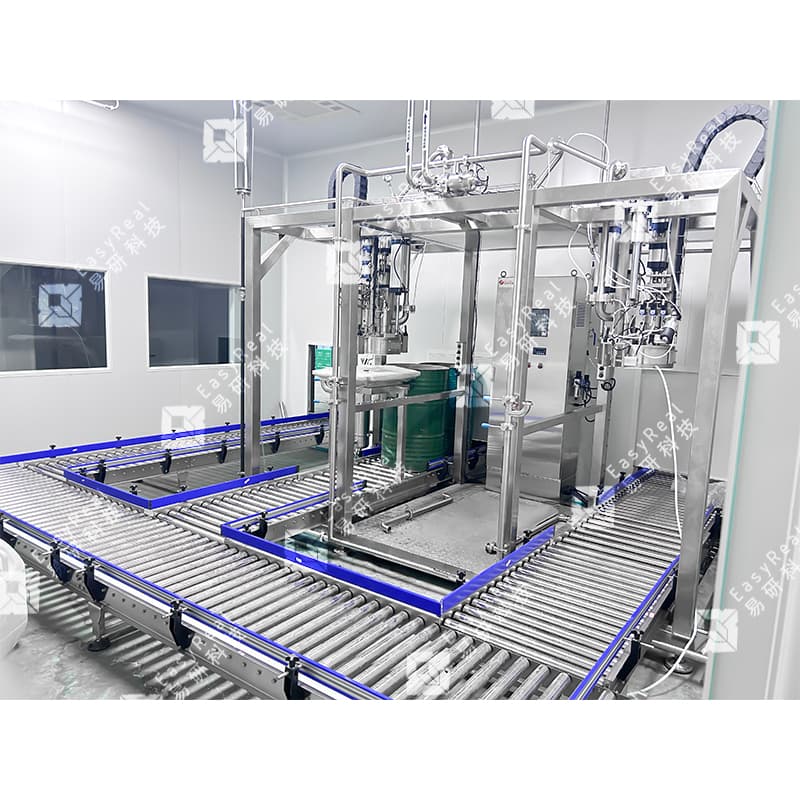
Aseptic filling cell and connected equipment. Photograph: EasyReal, source easireal.com.Photograph supplied by the equipment manufacturer.
An automatic aseptic bag filling machine sequences filling, metering and closure through a PLC and HMI, with recipe control for different products and pack sizes. The automation scope can include fitment treatment, cap handling, conveyor indexing, weight or flow feedback, and data records.
The word “automatic” needs a precise definition. Bag loading, drum presentation, box erection, case packing and palletising may remain manual or be handled by separate machines. The enquiry should state exactly which steps the filler must perform and which are line responsibilities.
PlatformAF-series
FormatsBIB · BID · BIC
HeadsSingle or twin
ControlPLC + HMI recipes
01
Define the automation boundary
List each step in the filling cycle and mark it automatic, operator-assisted or excluded. Typical automatic steps are fitment treatment, filling, metering, cap closure and recipe selection. Typical manual or semi-automatic steps are bag loading, drum spotting, box closing and finished-pack transfer.
A clear boundary prevents two common problems: paying for automation that does not remove the real bottleneck, or expecting the filler to handle packaging tasks that belong to a separate machine.
A recipe should hold the fill target, metering mode, valve and sequence parameters, alarm limits and product-specific checks. Confirm who can create, change and release a recipe, and what is recorded for each batch.
Traceability should connect the package lot, product lot, filling time and key process values. The exact data set depends on your food-safety plan and customer requirements; the filler is one source of records, not the whole system.
Automatic filling is only as repeatable as the product supply and the measurement. A flow meter needs a stable flow and representative density; a weighing system needs stable support and a defined tare. For viscous or particulate products, the stop sequence and valve response are part of the accuracy.
Closure is a critical control point. Confirm the cap presentation, torque or push-fit sequence, inspection method and response to a failed closure. Do not rely on a generic “automatic capping” description.
Automation should support a repeatable CIP and pre-sterilisation sequence, with valve states, temperatures, pressures and time recorded. Define what happens after a stop, a power interruption or a failed sterilisation step.
The filler does not establish product sterility. It maintains the agreed aseptic boundary after the upstream process. The cleaning and sterilisation acceptance criteria must be developed for the actual product, package and line.
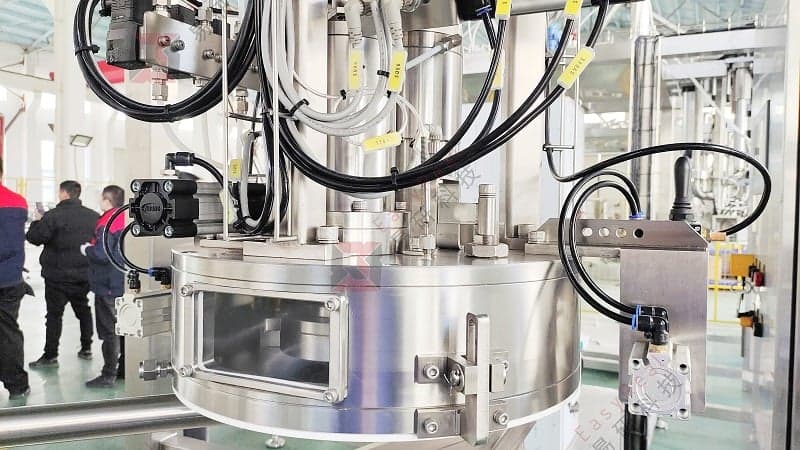
Manufacturer photographs show the filling head, drum or container handling and the connected cell. Final configuration, guarding and finish depend on the project.
What the catalogue confirms — and what it does not.
Use these values to frame the enquiry. The offered specification, drawing and acceptance test govern the actual machine.
Automatic aseptic bag filling machine — published catalogue and configuration reference
Filling heads
Single or twin headModel-dependent
Bag formats
BIB 1–25 L · BID 200/220 L · BIC 1000/1500 LBy model and change parts
Bag mouth / fitment
1 in and 2 in (25 mm / 50 mm)Exact cap and neck drawing required
Metering
Flow meter or weighing systemModel and product dependent
Published metering reference
Coriolis flow meter ±0.3% · weighing ±5 g resolutionCatalogue reference; acceptance on your product
Steam
approx. 50 kg/h single · 100 kg/h twinCatalogue reference at 0.6–0.8 MPa
Compressed air
approx. 0.04 m³/h single · 0.06 m³/h twinCatalogue reference at 0.6–0.8 MPa
Installed power
1 / 2 / 4.5 / 9 kW by modelModel-dependent; confirm final electrical schedule
Control
PLC + HMI, recipe and sequence controlFinal I/O and recipe scope by project
Cleaning / sterilisation
CIP circuit and steam sterilisation of the filling interfaceSequence, validation and boundary by project
Source: EasyReal AF-series aseptic bag filling catalogue. Catalogue values checked 22 October 2026. They are reference maxima for the model family, not a guarantee for a particular product, bag or line. Final model, scope and performance are confirmed in the offered specification.
PRODUCT FIT
Applications to review with this equipment.
Product names are a starting point. Viscosity, particles, temperature and the package interface determine whether a trial is needed.
It depends on the scope. The filler can automate fitment treatment, filling, metering, closure and recipe control. Bag loading, boxing, case packing and palletising may be manual or separate machines. Define the boundary in the enquiry.
Can one automatic filler handle several pack sizes?
Recipe control can store different parameters, but the physical change parts, bag support and handling may also need to change. Confirm the changeover procedure and time for each format.
Is an automatic filler more accurate?
Automation improves repeatability when the product supply and measurement are stable. It does not correct an unstable inlet, an unsuitable meter or a poorly supported bag. Acceptance must use the actual product and package.
Does automation replace CIP/SIP validation?
No. Automation can record and repeat the sequence, but the cleaning and sterilisation effectiveness must still be established for the actual equipment, product and process.
Send the product, bag or container, target net mass, output and site conditions. We will confirm the model, scope and evidence needed for the next step.